
Best PET CT Scan In Bangalore
Home » PET/CT Scan
- 100 % accurate PET-CT scan reports with high image quality, with our latest scan technology
- 25,000+ patient service with utmost care
- Clean and sanitized premises
- Low wait time, well trained staff with the best team of doctors.
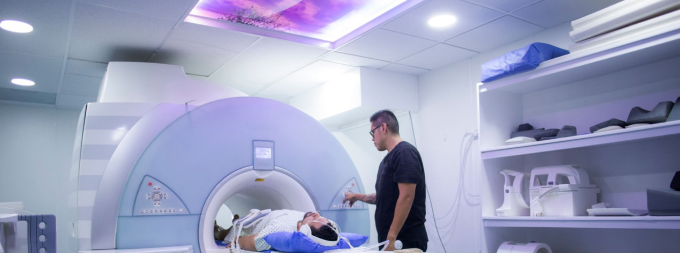
Kiran Nuclear Medicine & PET CT Centre: Excellence You Deserve
- PET-CT Scans: This is a combined imaging technique that combines the metabolic information from a PET scan with the anatomical detail of a CT scan. PET CT scans are particularly helpful for cancer diagnosis and staging
- SPECT Scans: Thyroid scan, renal scan (DTPA/EC and DMSA), myocardial perfusion scan (MPI), brain, and bone imaging etc.
- Theragnostic: Radioiodine therapy (ca thyroid and hyperthyroidism), Lu PSMA therapy, Lu DOTA therapy, Lu Fapi Therapy etc
What Is A PET/CT Scan ?
Why Is PET CT Scan Performed ?
- Detect and Stage Cancer: PET scans are commonly used in oncology to detect the presence of cancer, determine its stage, & assess the extent of its spread (metastasis). PET can help identify primary tumors & detect small metastases that may not be visible on other imaging modalities.
- Monitor Cancer Treatment Response: PET scans can assess how well a patient is responding to cancer treatment, such as chemotherapy or radiation therapy. Changes in metabolic activity within tumors can indicate whether the treatment is effectively targeting the cancer cells Cancer patients often need repeated PET scans at different stages of treatment — learn why this is standard oncology practice.
- Guide Cancer Treatment Planning: PET scans provide valuable information for treatment planning in cancer care. They help oncologists determine the optimal treatment approach, such as surgery, radiation therapy, chemotherapy, or a combination of these modalities
- Evaluate Neurological Disorders: PET scans are used in neurology to diagnose and evaluate various neurological conditions, including Alzheimer s disease, Parkinson s disease, epilepsy, and brain tumors. PET can detect changes in brain metabolism, blood flow, and neurotransmitter activity associated with these disorders
- Assess Cardiac Function: PET scans can evaluate blood flow to the heart muscle and assess cardiac function. They are used to diagnose coronary artery disease, evaluate myocardial viability after a heart attack, and assess the effectiveness of treatments for heart disease
- Detect Infections and Inflammatory Diseases: PET scans can detect areas of infection or inflammation in the body. They are used in diagnosing conditions such as osteomyelitis, vasculitis, and inflammatory bowel disease, as well as in localizing infections in patients with fever of unknown origin.
Types Of PET CT Scan In Bangalore
FDG PET CT
This is the most commonly PET CT can. FDG PET CT scans are a valuable tool for diagnosing, staging, and monitoring treatment of most of the cancer.
PSMA PET CT scan
PSMA PET CT scan, used for diagnosing, staging, monitoring prostate cancer and also identifying the source of rising PSA.
DOTANOC PET/CT
DOTANOC PET/CT, is a specialized imaging technique used to diagnose and monitor neuroendocrine tumors (NETs).
FAPI PET/CT
FAPI PET/CT scans target elevated FAP in cancers, aiding early detection, especially in those with low metabolic activity or aggressive behavior
PET CT Scans Cost
| Bone PET CT – NaF18 | Rs:- 18000 |
| Brain PET CT | Rs:- 18000 |
| DOTANOC PET CT | Rs:- 35000 |
| Exendin DOTA PET CT | Rs:- 35000 |
| FAPI PET CT | Rs:- 35000 |
| FDG PET CT | Rs:- 28000 |
| F-DOPA PET CT | Rs:- 35000 |
| PET Cardiac Sarcoidosis | Rs:- 20000 |
| PET Cardiac Viability | Rs:- 18000 |
| PET/CT Guided Biopsy | Rs:- 45000 |
| PSMA PET CT | Rs:- 35000 |
| Regional PET CT | Rs:- 18000 |
| Trivehexin PET/CT Scan | Rs:- 35000 |
| Bone PET CT – NaF18 | Rs:- 12000 |
| Brain PET CT | Rs:- 14000 |
| Regional PET CT | Rs:- 14000 |
| PET Cardiac Viability | Rs:- 14000 |
| Full Body FDG PET CT | Rs:- 25000 |
| PSMA PET CT | Rs:- 29000 |
| DOTANOC PET CT | Rs:- 29000 |
| FAPI PET CT | Rs:- 29000 |
PET CT SCAN Is Done For All Solid Organ Cancers Like:

Brain
Breasts

Colon

Esophagus
Liver
Lungs

Stomach
What Kind Of Preparation Is Needed For The PET CT scan
- Fasting: In some cases, you may be asked to fast for a certain period before the PET scan. This typically involves refraining from eating or drinking anything except water for several hours before the scan
- Medication: Certain medications may affect glucose metabolism in the body, which could impact the interpretation of the PET images. Your healthcare provider will review your medications and provide guidance on whether any adjustments are needed
- Blood sugar levels: If your PET scan involves the use of a radioactive tracer that is similar to glucose, such as FDG (fluorodeoxyglucose), it s essential to ensure that your blood sugar levels are within a specific range before the scan.
- Hydration: Drinking plenty of water before the PET scan can help improve the distribution of the radioactive tracer throughout your body, which can enhance the quality of the images.
- Clothing & personal items: You may be asked to wear comfortable clothing without metal fasteners or accessories for the PET scan.
- Medical history & allergies: Before the scan, your healthcare provider will review your medical history and any known allergies to ensure that the procedure is safe for you. Be sure to inform the healthcare team if you have any allergies, medical conditions, or concerns about the procedure.
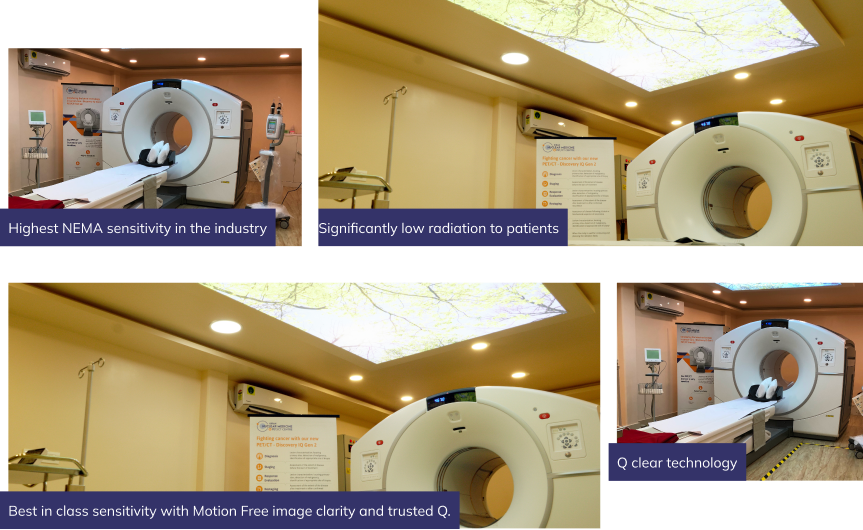
The Next Generation Technology is Here at Kiran PET CT - GE-DISCOVERY IQ GEN 2
Why Choose Us For PET CT Scan In Bangalore
Speedy and accurate results
Our PET/CT scans deliver swift & precise diagnoses, ensuring timely insights into your health

Cutting-edge technical instruments
Trust in the expertise of our skilled professionals who are dedicated to providing unparalleled care

World Class Technology
Experience the latest advancements in medical imaging technology with our state-of-the-art PET/CT equipment.
Onestop Lab Centre
Streamline your healthcare journey with our comprehensive lab services under one roof.
Meet Our Doctors




Frequently Asked Questions
This question aims to provide an overview of PET (Positron Emission Tomography) scans, including how they work and their differences from other imaging modalities such as CT (Computed Tomography) or MRI (Magnetic Resonance Imaging).
This FAQ focuses on the typical medical conditions or purposes for which a healthcare provider might recommend a PET scan, such as cancer detection, brain disorders, or heart conditions.
Safety concerns regarding radiation exposure and potential allergic reactions to the radioactive tracer used in PET scans are addressed in response to this question.
Patients often want to know what preparations are necessary before undergoing a PET scan, including fasting requirements, medication adjustments, and any specific instructions from their healthcare provider.
This question addresses the procedure itself, including whether the patient will need to lie still, receive an injection of a radioactive tracer, and how long the scan will take.
Patients are typically eager to know when they can expect to receive the results of their PET scan. The answer usually involves information about how long it takes for the images to be interpreted by a radiologist and for the results to be communicated to the patient’s healthcare provider.
What is a PET/CT scan?
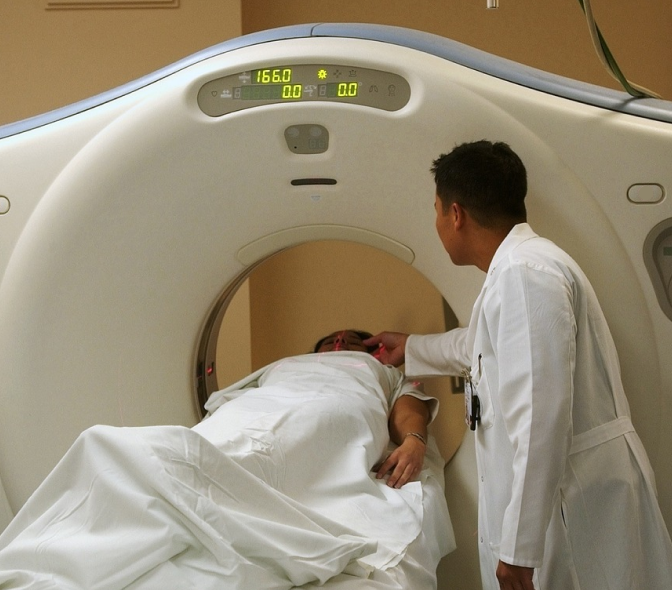
A PET/CT scan is an advanced diagnostic test that combines two imaging techniques in a single session: Positron Emission Tomography (PET) and Computed Tomography (CT).
The PET component shows how the body’s tissues and cells are functioning, while the CT component provides detailed images of the body’s structure. Together, they help doctors see not only where an abnormality is located but also how active it is.
At Kiran Nuclear Medicine and PET CT Centre, PET/CT scans are performed at our Banashankari 2nd Stage and Indiranagar centres in Bangalore using the GE Discovery IQ Gen 2 system, and are widely used for cancer diagnosis, staging and treatment planning.
How does a PET/CT scan work?
Before the scan, a small amount of a radioactive tracer is injected into a vein, usually in your arm. The most commonly used tracer, FDG, is a form of glucose. Cells with higher metabolic activity, such as many cancer cells, absorb more of this tracer.
After a short resting period that allows the tracer to spread through the body, you lie on the scanner bed while the PET scanner detects signals from the tracer and the CT scanner captures cross-sectional X-ray images. The two sets of images are then combined, allowing our nuclear medicine specialists to pinpoint areas of unusual activity with high accuracy.
Depending on your condition, your doctor may recommend a specialised tracer, such as PSMA, DOTANOC or FAPI.
What conditions or diseases can a PET/CT scan detect?
PET/CT scans are most widely used in cancer care, including the diagnosis, staging and monitoring of most solid organ cancers. At Kiran PET CT, we offer several types of scan to suit different conditions:The most commonly performed scan, FDG PET/CT, is used to diagnose, stage and monitor a wide range of cancers.
- The most commonly performed scan, FDG PET/CT, is used to diagnose, stage and monitor a wide range of cancers.
- For prostate cancer, a PSMA PET/CT scan helps with diagnosis, staging and monitoring, and can identify the source of a rising PSA level.
- To diagnose and monitor neuroendocrine tumours (NETs), a DOTANOC PET/CT scan is the specialised choice.
- Cancers that show low metabolic activity on FDG scans or behave aggressively can be assessed with a FAPI PET/CT scan.
- For evaluating brain function, bone disease and heart muscle health, we offer Brain PET/CT, Bone PET/CT (NaF18) and PET Cardiac Viability scans.
Your referring doctor will advise which scan is most appropriate for you.
Is there anything I should do or avoid after a PET/CT scan?
Most patients can return to their normal routine straight after the scan. To help your body clear the tracer, we recommend drinking plenty of water and passing urine regularly for the rest of the day.
As a simple precaution, avoid prolonged close contact with pregnant women, infants and young children for a few hours after your scan. You can usually resume your normal diet and regular medications, including diabetes medication, unless your doctor advises otherwise.
If you are breastfeeding, please inform our team before the scan so we can give you specific guidance. Our staff will explain any aftercare instructions relevant to your particular scan before you leave.
Are there any risks or side effects associated with a PET/CT scan?
PET/CT is a safe and well-established procedure. The amount of radioactive tracer used is small and short-lived, and it leaves the body naturally within hours. Allergic reactions to the tracer are extremely rare.
If a CT contrast agent is used, a small number of patients may experience a mild reaction, so please tell us about any allergies, kidney problems or previous reactions to contrast. It is also important to inform our team if you are pregnant, may be pregnant or are breastfeeding.
Our experienced specialists follow careful safety protocols to keep radiation exposure as low as possible, and the diagnostic benefits of the scan generally far outweigh the minimal risks.
Can a PET/CT scan be used to monitor treatment progress?
Yes. PET/CT is one of the most valuable tools for tracking how well a treatment is working. Because it measures the metabolic activity of tissues, a PET/CT scan can often show changes in a tumour’s activity before any change in its size is visible on other scans.
Doctors use follow-up scans to assess the response to chemotherapy, radiotherapy, immunotherapy or targeted therapies, to decide whether a treatment plan needs adjusting, and to check for signs of recurrence after treatment is complete.
At Kiran PET CT, we also offer theranostic treatments such as Lu PSMA and Lu DOTA therapy, where PET/CT imaging plays a key role in both treatment selection and monitoring.
Will my insurance cover the cost of a PET/CT scan?
Is a PET/CT scan painful or uncomfortable?
A PET/CT scan is painless. The only discomfort most patients feel is a brief pinprick when the tracer is injected into a vein.
After the injection, you will rest quietly for a short while before the scan. During the scan, you lie comfortably on a padded bed that moves slowly through an open, ring-shaped scanner, so most people do not feel closed in.
You will need to lie still for the duration of the scan to ensure clear images. If you feel anxious, find it difficult to lie still, or have concerns about claustrophobia, please let our team know in advance.
Our staff will make sure you are comfortable and supported throughout.